

Achieving Precision in Custom Sheet Metal Stamping Parts Manufacturing
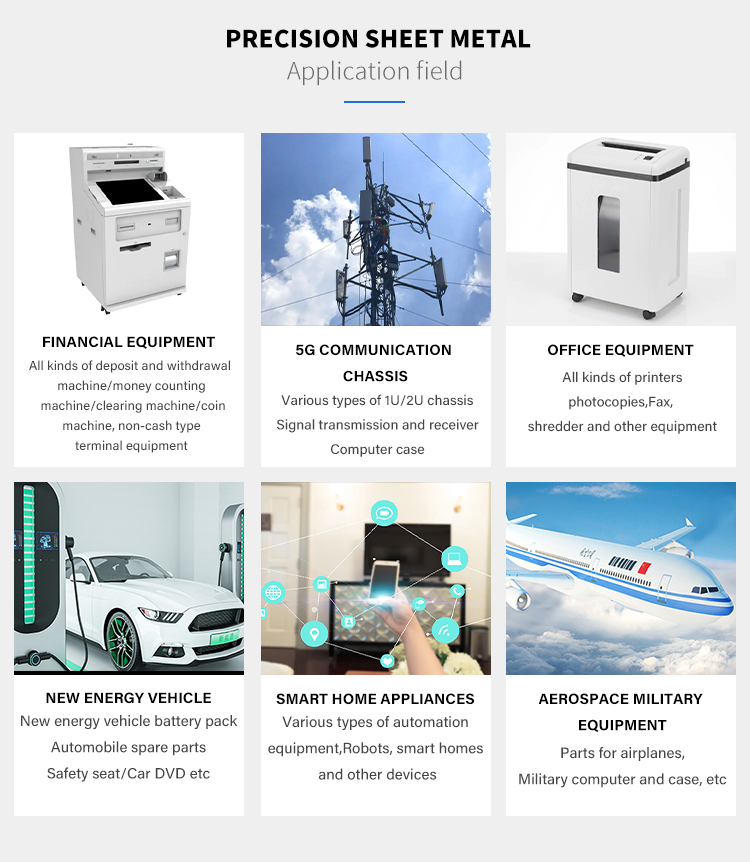
In modern manufacturing, Sheet Metal Stamping stands as a critical process for producing high-volume components with exceptional consistency. As industries demand increasingly complex geometries and tighter tolerances, precision stamping has evolved from basic cutting to sophisticated forming technology capable of creating intricate OEM Sheet Metal Stamping Parts for automotive, aerospace, and electronics sectors.
Precision Tooling Design: Engineering for Excellence
The foundation of quality precision metal stamping lies in the design of the tooling. At Dongguan Shangen, our engineering team employs:
-
3D simulation software (AutoForm/SolidWorks) predicting material flow and stress points
-
Modular die systems allow for rapid configuration changes
-
Progressive dies with ≤ 5μm clearance for burr-free edges
-
Sensor-embedded tooling for real-time pressure monitoring
Case Study: Automotive Seat Bracket Production
For a leading EV manufacturer, we delivered 1.8M units/year of structural brackets featuring:
| Parameter          | Requirement | Achieved |
|--------------------|-------------|----------|
| Thickness          | 2.0±0.1mm   | 2.02mm   |
| Hole Position      | ±0.05mm     | ±0.03mm  |
| Flatness           | 0.1mm/m²     | 0.07mm   |
Using servo-press technology and Class-1 tool steel dies, we reduced scrap rates to 0.2% while maintaining cycle times under 2.5 seconds.
μm).
Quality Assurance in High-Volume Production
Our Fabrication Services implement multi-stage verification:
-
In-Process Monitoring
-
Vision systems check critical dimensions every 50 cycles
-
Force-displacement curve analysis detecting tool wear
-
-
Statistical Process Control
-
Real-time CpK tracking (minimum 1.33)
-
Automated sampling for destructive testing
-
-
Traceability Systems
-
Laser-marked QR codes on every component
-
Cloud-based production records (ISO 9001 compliant)
-
The Automation Revolution
Industry 4.0 technologies are transforming Sheet Metal Stamping:
-
AI-Powered Defect Detection: Neural networks identifying micro-cracks invisible to human inspectors
-
Cobotic Material Handling: Reducing changeover time by 70%
-
Digital Twin Integration: Simulating 500,000+ cycles before physical production
-
Predictive Maintenance: Vibration sensors forecasting die service needs within 2-hour accuracy